I am setting up a journal for a first time. Where do I start?
Despite the fact journaling often being connected to children years while we are in school, it gain a lot of popularity over the past couple of decades in between adults. In fact ones of the most successful people were using journaling and kept few of them throughput the life. The most memorable names would be Steve Jobs from modern era or Leonardo Da Vinci from the past.
Journaling started though much earlier than that and its first traces are as early as 554AD in China. Very first diaries of retrospective nature were written by ladies of the royal Japanese court in the 10th century.
Journaling is a widely used therapeutic method in therapy, where clients are advised to journal as a self-reflective journey, as a healing tool for spiralling mind as a gainer of clarity and more.
What are the benefits of Journaling?
Human mind is a very complex to navigate and mostly we are unaware of its work. Our brain picks up on many cues throughout the day, mostly unconsciously to our benefit and help us function in everyday life throughout often automatic behaviours.
Maybe you noticed that a lot of ideas would come to you in the shower, or that your mind spirals in the mornings or you find yourself unable to sleep due to overactive mind.
Journaling can be of help here.
When we journal we are creating space in our minds. We are putting thoughts elsewhere and we don’t keep carrying them around. Due to multiple cues in a day and roles we need to fulfil our mind very easily fills up and keeping us away from present moment. When we leave the present or are mostly elsewhere in our minds we are as well slowly becoming less connected to our emotions, our bodies and often this might lead to unhappiness, depression and anxiety. It is a form of necessary self-protection specially if we experienced difficult experiences throughout the life or chronic stress. None of these are uncommon in nowadays disconnected society and maybe that is one of the reasons why journaling became popular over the past decades.
Saying above one of the main benefits of journaling would be SPACE and MENTAL CLARITY.
What are mental health benefits?
When we journal we are not only creating space in our minds, but we are as well processing events, experiences and ultimately our emotions. Journal can be often self-soothing tool or a tool how to access our emotions and become more aware. By putting thoughts down we become less judgmental or more aware of inner critique and so ultimately we experience less negative emotions.
According to PositivePsychology.com benefits of journalling are:
Reducing anxiety
Breaking away from a nonstop cycle of obsessive thinking and brooding
Improving the awareness and perception of events
Regulating emotions
Encouraging awareness
Boosting physical health
Writing about stressful and traumatic events can significantly benefit our physical and emotional health.
In fact, studies show that time spent journaling about our deepest thoughts and feelings can even reduce the number of sick days we take off work (Sohal, Singh, Dhillon & Gill, 2022).
Research suggests that journaling can help us accept rather than judge our mental experiences, resulting in fewer negative emotions in response to stressors (Ford, Lam, John, & Mauss, 2018; Baikie & Wilhelm, 2005).
How do you start?
If you’ve never journaled before it can feel quite intimidating sitting in front of a blank page.
There are various ways to approach this:
You can google some journaling prompts for every day journaling or you can find prompts and focus on some theme in your life – relationships, friendships, self-esteem, divorce, loss etc.
Morning pages – basically start writing whatever comes to mind in the mornings and until you didn’t fill 2-3 pages you won’t stop. No judgment over content, grammar, how pretty it looks. You are just taking thoughts as messy they are down on the paper.
Start with highlight of a day every day – just one sentence or one sentence what you are grateful for
Follow one of the methods of people who journaled before you – there is lot of ideas on youtube by ordinary people as you, there are journaling ideas from successful people like Leonardo Da Vinci and others which could serve as an inspiration to find out what kind of journaling suits best for you.
These are possible first steps how to approach journaling. As more you write as more you start connecting dots and clarity will emerge together with possible emotions. Journaling is in this sense amazing tool, because journal won’t judge you for your thoughts and emotions, you can pour them out as they come, name them, connect them to people, places, events and through this process slowly let go.
Setting up a journal for a first time and every time after that can be part of a self-care ritual. You buy a notepad which speaks to you, you research how to incorporate journaling to your life and you make it part of morning or evening routine or you keep journal with you at all times. If you are creative and visual person you might want to incorporate drawings, if you are analytical you might want to be able measure either your habits, sleep patterns etc.
I will end here for today, but throughout this month theme of JOURNALING will possibly appear in few more articles in relation to how to journal.
These would be certainly most common feelings I would hear from clients or experience myself in months leading towards Christmas and even once they arrive. Christmas is a beautiful time of the year, joyful and merry for many.
BUT.
For many it is time of sadness, remembering people we lost, time of stress and overwhelm from pressure Christmas creates for us financially, emotionally and mentally by the sudden energy and effort and resources we often don’t have and we need to put into buying or creating presents. Everyone on high alert and stressful energies gathering together with families when these stresses are released and people argue, blame and often forget about what the whole Christmas were meant to be about. Not talking about those who might not have anyone to celebrate with and whole Christmas is a reminder of their own loneliness.
Imagine how we would approach each other if we’d decide not giving each other presents or if we decide we won’t come to visit or we won’t make big meals?
For many this would create even more sad feelings, because Christmas are meant to be about celebration about gathering together about giving presents because we care about each other. Managing opposing ideas and wishes within groups of people can be difficult as one might be okey with not giving presents within entire family inbetween each other meaning it in the best possible intention – to reduce stress for everyone, but a family member or a friend might see it as they don’t care enough about the relationship if they can’t even think of giving a present, visit or cook big meal.
I would be curious if the answer is somewhere in the middle, if it is about recognising what we need and how we can fit this within others or if it is even possible. Maybe there’s place to have conversations about Christmas presents if this is too big of a restrain on us, maybe it is having conversations about visits, if we want to have a quiet time within small family or inbetween partners only, maybe it is having conversation about cooking duties and how much can be done and for how many people.
And ultimately if it feels too much, too stressful or too overwhelming it is okay to not celebrate at all as well. Many years ago I couldn’t even imagine not celebrating Christmas, but there are actually many people out there who don’t and it is same valid because this is the way it works best for them.
Bringing such ideas within specially family can be difficult and you might be met with no understanding. Possibly approaching it from compassionate place where you understand this might be painful in some way for them, reassuring them that your relationship towards them is still the same, but you just find it too much at the moment, might be one of the ways going about it.
Sometimes we get so caught up in our own ideas and how we consider world to work best, that we don’t allow needs of other people to come forward, we stop being open to different possibilities and realities other people might be living in. I get it and certainly I’ve been guilty of such many times. It is after all how our brains work, we have a ‘blind spot’ towards ourselves where we can’t see ourselves just the way we are. It’s quite human in fact. But especially when other realities are just so alienated to ours this might ultimately mean that these relationships might not survive and carry on, at least not in connected genuine way, because we are just way too different people. It might all lead to acceptance of others people realities, acceptance of the dynamic it creates and even acceptance of possible end. But here I am going to a completely different topic possibly for another day.
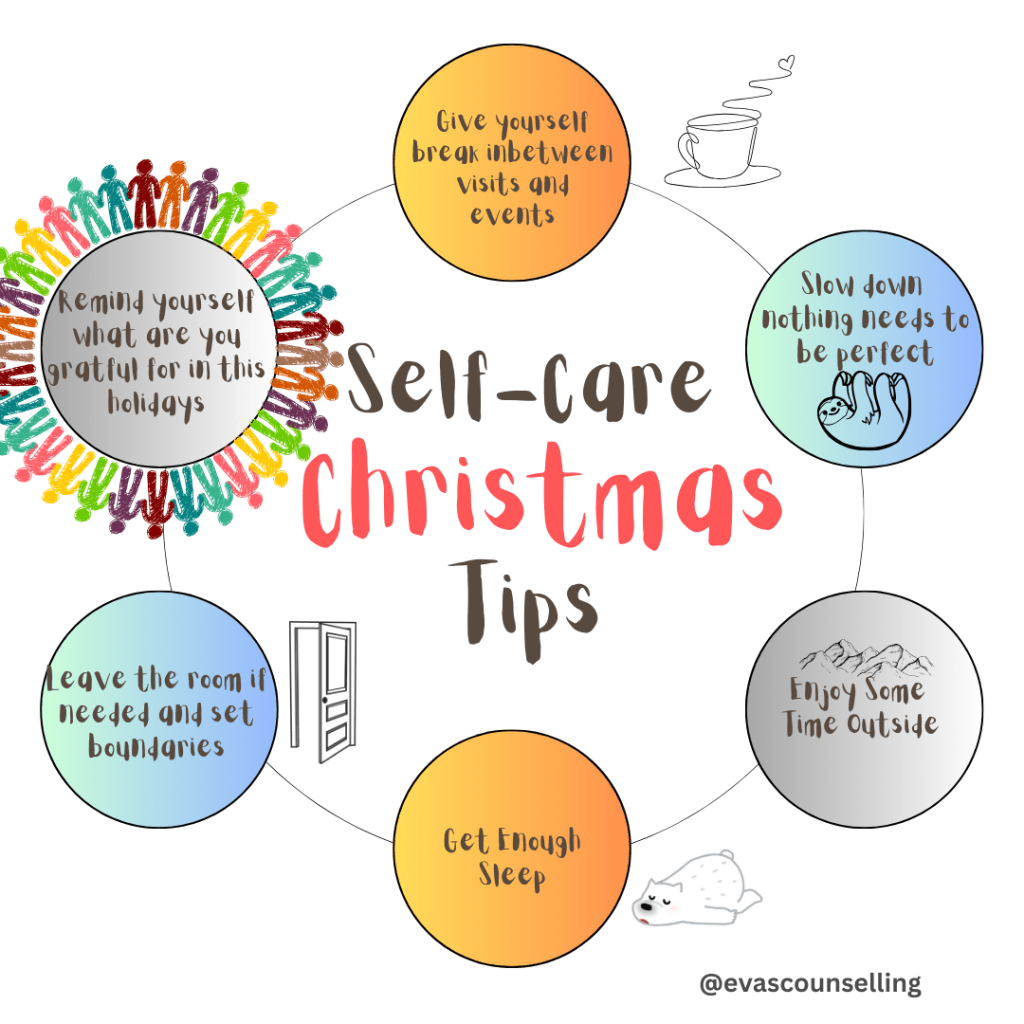
As a society in countries celebrating Christmas we jump on the whole Christmas roller coaster either we want to or not because it is expected of us. Some of us really enjoy this time period and some of us would rather not to celebrate at all and both options are equally valid. If you want to celebrate, please do by all means, but if you don’t, please do by all means as well.
This one is a bit different one to previous articles, but as it is Christmas and there is so much of cheering I felt that it might be important to speak towards those who feel the overwhelm this holiday creates helping you allowing yourself to be just you within the pressure. Allowing yourself to take care of your own needs and practice self-care. Allowing yourself to listen to your body and take on board what it has to say.
In all honesty I am one learning exactly that myself. It is not a sprint but a marathon, where we sometimes go and are not yet able set appropriate boundaries neither we are able to not get into arguments. It is okay. It is a trying pool where we can observe where we stand.
So I wander do you celebrate Christmas?
Do you enjoy this festive season or does it bring up mostly negative feelings for you?
How are boundaries working for you in this season?
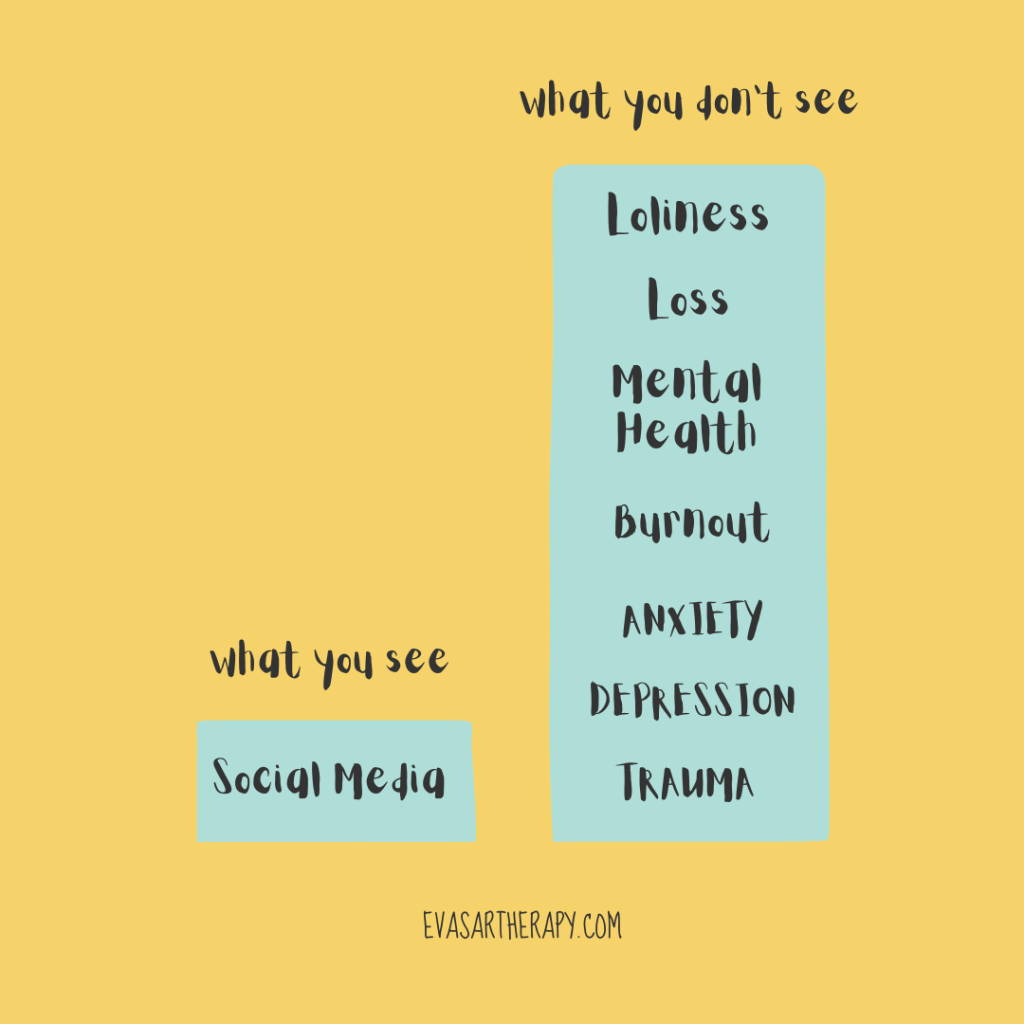
Have you ever felt low even depressed when consuming social media content?
Have you ever felt such when watching news in the TV?
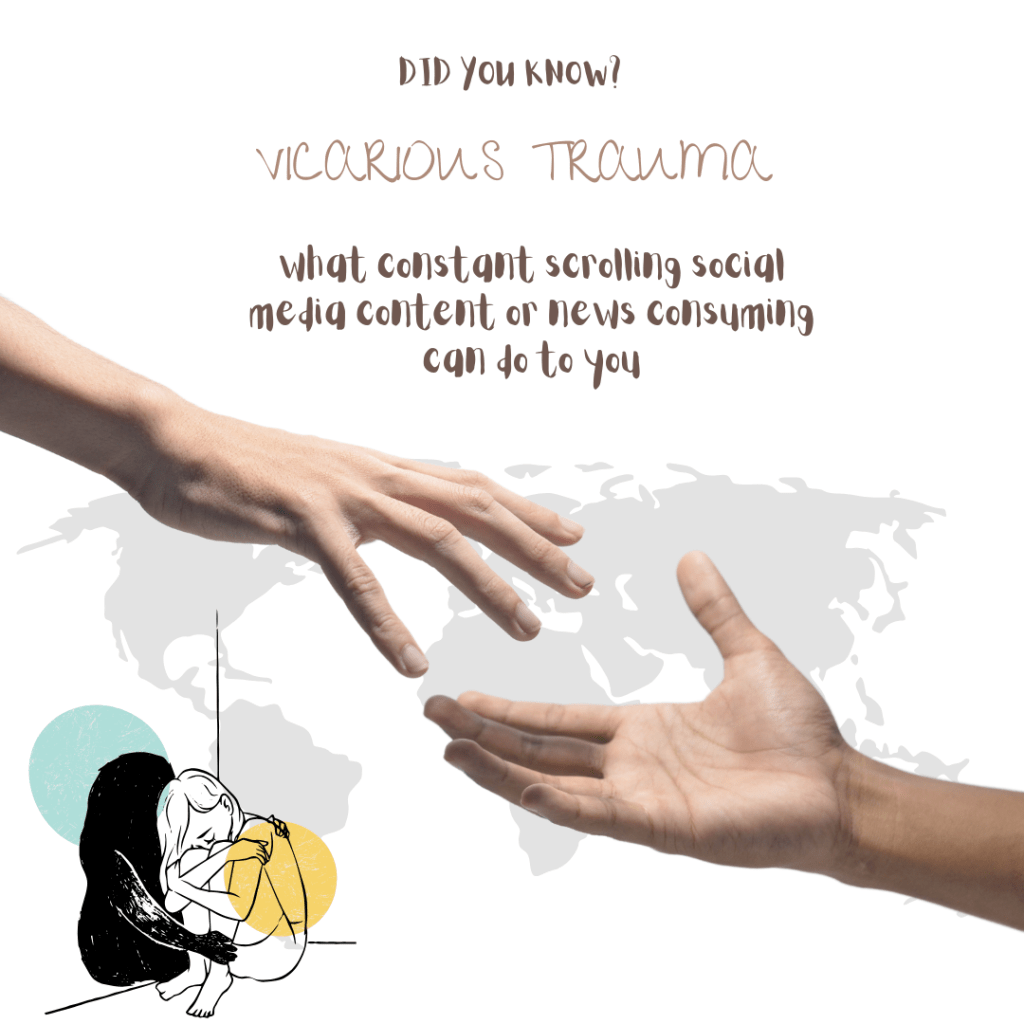
I am not sure about you, but I am sensitive person who gets feels from things happening around. The connection to my emotions makes me often feel even through the screen what is happening with people or animals there. I find social media and internet itself to be very dangerous and detrimental to our mental health in this sense. One of the things which I will focus on some other time is the lowering attention span we are experiencing by consuming social media content. Another one which we will be focusing on this week has a fancy name in psychology world – Vicarious Trauma.
What is Vicarious Trauma?
British Medical Association defines Vicarious Trauma as follows:
‘Vicarious trauma is a process of change resulting from empathetic engagement with trauma survivors. Anyone who engages empathetically with survivors of traumatic incidents, torture, and material relating to their trauma, is potentially affected, including doctors and other health professionals.’
This is often something experienced by people in health professions, but as well therapists, social care workers, carers, journalists, police officers etc. but as well by you consumer of traumatic news and content. Nowadays culture is based on sharing everything happening in the world. One side of such is staying informed and getting often first hand news and experiences from people directly where the events are happening, but another side of the coin is that you consume and experience as if it to be your own traumatic experience.
How does Vicarious Trauma influences us?
Let’s take for instance any war in the world you might identify with for cultural, geographical or any other reasons. This is a huge traumatic event survivors are going through, likely experiencing as trauma. They share content about it to raise awareness and get necessary help, which is absolutely right thing to do, because it is important for the world to know.
BUT.
You as a consumer of such content in your home on your sofa is emotionally engaging with the trauma these survivors are talking about. It is sort of natural human healthy interaction, but normally we do this with people around us which is often a small group of people in our family and friends which if we take care properly for ourselves we are able to handle.
BUT.
What happens when you do this a lot one post after another, which algorithm on social media often makes sure you do, you are consuming trauma of other people by emotionally engaging with the content which ultimately might lead to following symptoms:
experiencing lingering feelings of anger, rage and sadness
becoming overly involved emotionally with survivors
experiencing bystander guilt, shame, feelings of self-doubt
being preoccupied with thoughts of survivors once away from social media
over identification with the survivors (having horror and rescue fantasies)
loss of hope, pessimism, cynicism
distancing, numbing, detachment, cutting people off, staying busy. Avoiding listening to stories of traumatic experiences
All of these apply as well for already mentioned health care professionals, another layer they might experience is difficulty in maintaining professional boundaries with the client, such as overextending self (trying to do more than is in the role to help the patient).
Unfortunately health professionals apart of therapists and psychologists often don’t have an outlet where to go and process Vicarious Trauma. Therapists usually have a supervisors and supervision groups where they bring such things as Vicarious Trauma because their job is very much related to shared trauma. But other professionals often don’t have incorporated such in their work and so often this brings them to people like me, therapists, as they recognise change in their behaviours and mentioned symptoms.
I have to say it is not only health professionals who suffer from such. There are multiple clients I had over the course of years, who’s profession did not include dealing with traumatic events, yet they would exhibit symptoms of Vicarious Trauma. Some was due to family and other relationships dynamics, but some was purely from consuming internet content.
These people than stopped being functioning for their immediate circle and this is something we see often happening in nowadays society, when people are distancing themselves from close people due to inability to deal with anything heavier and more difficult to handle. To a degree this is healthy as it is not our responsibility to deal with all the issues our loved ones and people we care about might have and there is responsibility on their shoulders to reach for help from professionals if people around find it to be too much. But if we become dysfunctional and emotionally distant to people around because of engaging with content on internet that is a red flag for us, that maybe we are the ones who need to put in place some actions to become again functioning and emotionally available.
I am not trying to say here we should all become ignorant to world events and close eyes when there are atrocities happening around the world. But what we might need to do is being aware that we can only pour from a full cup. We need to be maybe aware of such things such as Vicarious Trauma and recognise its symptoms and put in place actions which will help us deal with such. We might maybe need to be honest with ourselves and recognise that all we can truly influence is our physical environment around and that is the true and genuine help we can really offer to the world. By all means share what you feel is important to share with the world, but stay aware of the impact consuming a lot of such content has on you.
Never before was self-care so important as it might be in the world of internet and social media. Never before was self-awareness and connection with ones body and emotions so important as it is these days, because only if we understand what is happening with us we are able to change something. Only then we are able to put in place necessary boundaries or actions to be able show up for the world around us in constructive way and pour from our own full cup.
What can we do to prevent Vicarious Trauma?
When professionals experience Vicarious Trauma the nature of their work make their colleagues, supervisors or other professionals alert about symptoms and they often might be encouraged to seek professional help in order to work through what is happening for them. Despite them recognising effects of Vicarious Trauma someone around them might point symptoms out for them and due to their responsibility for patients or clients they might have to seek some help. The awareness might be as well a bit greater within themselves as the nature of the work they do pushes them to seek information or is getting to them through professional workshops etc. Ordinary person who’s job does not involve dealing with traumas of other does not get to such information and that is why I feel importance of bringing these terms out into open and talk about mental health.
So what can you do as a consumer of traumatic content in TV or social media do in order to prevent Vicarious Trauma? (following points were taken from British Medical Association with my own commentary)
Increase your self-observation – recognise and chart your signs of stress, vicarious trauma and burnout.
I get it learning about yet another aspect of your life – mental health can feel overwhelming and daunting. But in fact it is the most what you can do for yourself in order to live fulfilling live. Without attending to your mental health other aspects in your life might be one way or another falling apart.
Take care of yourself emotionally – engage in relaxing and self-soothing activities, nurture self-care.
If self care feels selfish there is a chance some of limiting believes within you need to be addressed. Many of us were told that not sharing with others, being ourselves, expressing what we are not okey with, taking time for ourselves and many others are selfish and we shouldn’t be like that. Act of self care is in fact one of the selfless actions specially if our intentions for doing so lie in being able to contribute to lives of others in professional or personal sense. If we take time for ourselves to fill our own cup only means we will be able to give others in the long run.
Look after your physical and mental wellbeing.
Maintain a healthy work/life balance – have outside interests.
Be realistic about what you can accomplish – avoid wishful thinking.
In this sense it might apply to our need to save others and help absolutely everywhere around. Maybe it is important to realise we can not in fact help people in their difficult situations on the other side of the globe or maybe not even within our own country because we just don’t have financial, emotional, mental or physical capacity of doing so and that is okey. It does not make us worse people, it makes us honest and aware people who maybe one day will be able to put their strengths somewhere important when their own circumstances allow them.
Don’t take on responsibility for your patients’ wellbeing but supply them with tools to look after themselves.
Balance your caseload – mix of more and less traumatised clients, victims and non-victims.
Even though these two point apply for professionals mostly it is something what we often need to learn in personal lives as well. We can not take responsibility for everyone around specially if they are functioning adults. We might not understand their path or even agree with their actions, but they are after all responsible for their own lives. We can share our own tools or experiences we think might be helpful for them specially if they ask, but it is their autonomy and freedom to decide if they want to use them or take something from them.
Take regular breaks, take time off when you need to.
Seek social support from colleagues, family members.
Consuming only sad, emotional and traumatic content might be a bit too much for our psyche to process. After all as humans who just entered technological era we are not equipped to handle and cope with such a fast pace emotional overload media push onto ourselves. Social media detox, stop watching news or sometimes tv altogether, stop reading newspapers or articles online might be a necessary action for us to take time to time in order to reset our mindset and ease emotional overload we are consuming on day to day bases.
If you need it, take up group or individual therapy.
Ultimately if you find yourself experiencing mentioned symptoms and they have effect on your mood, relationships, work or life in general it might be time for you to discuss and gain clarity what’s going on for you with a professional.
I was in my 20s when I first time recognized that emotion I feel the pit in the stomach is in fact anxiety. I thought we all have it and it is a normal state of bodily feelings, so I learn to push through the feeling my entire life, without acknowledging, addressing or naming what is happening. Until life circumstances made it to be all a bit too much. That was first time I went to therapy, which led later to my own therapeutic training and towards the career I am in now.
My own personal story is not important though.
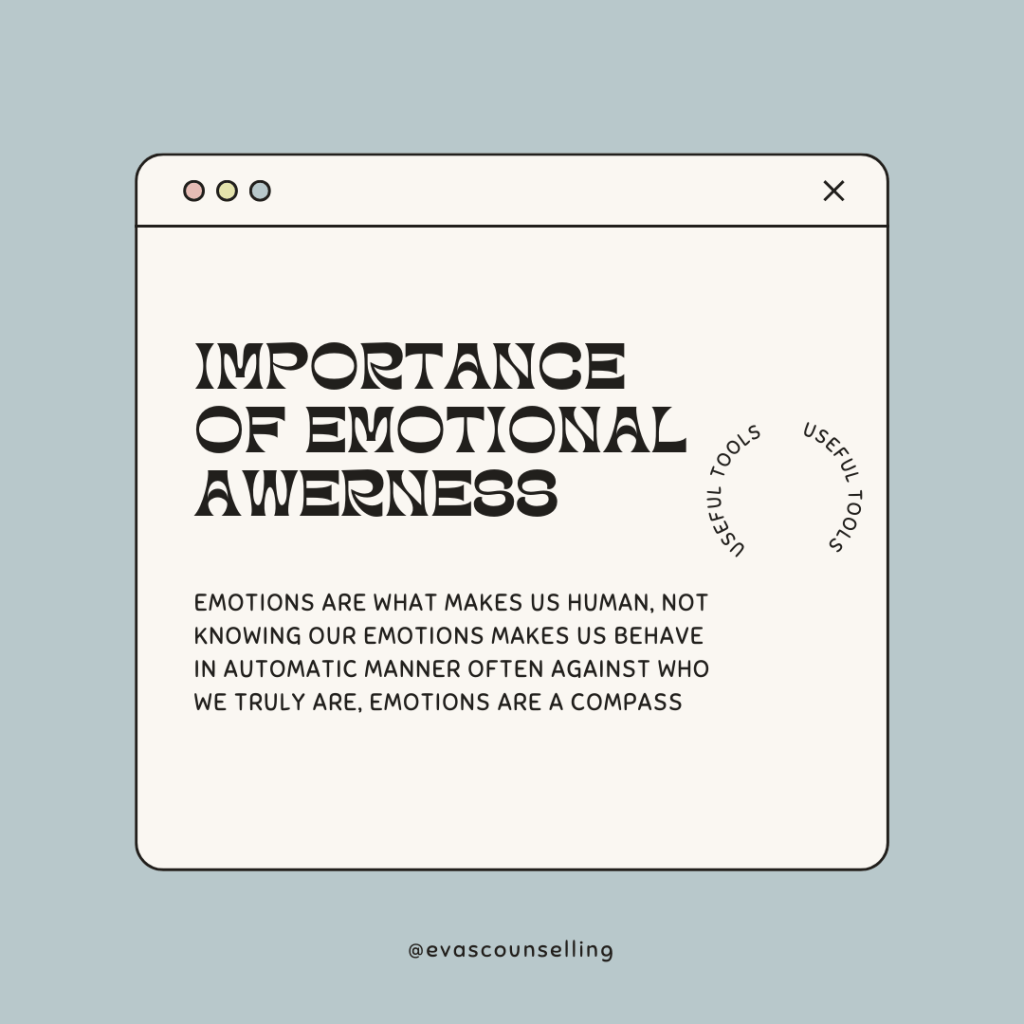
The reason I am sharing this is that I did not know how important emotional awareness is. Sometimes we are very self-aware on cognitive level, but we are just not in touch with our own emotions, with our body. Many are just not thought to name and recognize their emotions from very early age.
The whole system our society was built on does not teach children emotional awareness. I correct myself it did not used to…things are changing…thank god. Although another topic would be how ‘emotional’ subjects are being slowly erased to make more space to logical ones, unfortunately.
Where it all started?
Given the complexities of emotions, Robert Plutchik psychologist, who developed the Emotion Wheel to assist people define and name their feelings. He is a founder of theory of emotion, when he first time classified general emotional responses. The awareness itself helps, but he went even farther and proposed that defense mechanisms were in fact manifestations of core emotions.
Nowadays…
Many are still shamed for feeling negative emotions throughout the life and this slowly but steadily builds up our belief system about ourselves and the world. We see the spike in people experiencing depression, anxiety and all sort of others mental health issues. Often those who claim they never experienced these are in fact just not in touch with their own bodies and emotions.
If we learn to listen to our own emotions, when we recognize how we feel in different moments, we might be able to make choices in life which will reflect our values and who we truly are. We might learn to set boundaries if we need to and we might feel less impact of stress in our everyday lives.
We become more authentic and other people can better relate to us, which leads to deeper relationships reflecting our own individual preferences.
I am curious..
Do you remember when you learn naming emotions, if ever?
There is a tool often used by therapists called ‘emotional wheel’ developed by already mentioned Robert Plutchik. I often hear from clients when seeing the wheel for a first time sense of amazement. They did not know there is so many emotions. I often reach for emotional wheel in my personal life as well. After all we all are human and in fact emotions make us so.
I believe that emotional awareness does not belong solely to a therapy room, where people often find themselves when in crises. Recognizing emotions, naming them and being able to address them and communicating them in healthy way, should be a part of our culture, every day life, workplace, in our relationships. It might help us to become a whole human, who might find themselves in crises in different stages of their life, but would be as well more equipped to handle them.
I am including this basic tool here, but can be found anywhere on internet.
In the middle of the wheel you can find basic emotions. The second tire shows a bit deeper emotions behind the basic ones, which language we use sometimes for and the third tire shows even deeper emotions we don’t often recognize they exist or that they are related to the basic ones.
For therapists and mental health professionals is subconscious mind fascinating place, source of who we are, what drives us. One of the purposes of therapy is to help us bring subconscious into consciousness.
You might ask why would we want to do that?
Because once subconscious becomes conscious we can decide what we want to do with it, change patterns of our behaviour and decide if how we function, how subconscious drives us functioning serves us or not anymore. Very often we run on autopilot and our autopilot drives believes we have within us about ourselves, about others, about the outside world. We can be reactive or hold strongly negative emotions towards someone/ourselves or the opposite we might feel very connected and close to someone else. Therapy helps to understand these connections and the believes we hold. Sometimes these are creating negative feeling within us and standing in our way, making our life miserable. To understand where our emotions and feelings are coming from we need to understand ourselves and bring some of the unconscious into awareness.
Sometimes this can be painful process, because often our believes are tighed with emotions, which are stored in our bodies for every time we were not allowed to express them. As we start discovering things about ourselves these emotions start to be released and we need to feel them.
Therapy is a place where thanks to bunch of therapeutic tools and a therapeutic relationship these can be released and if needed brought into consciousness in a safe paced manner. There are different types of therapy for different issues, not every therapeutic process works this way as relived past experiences can be sometimes harmful or unnecessary and different direction in therapy is needed.
Once they are felt they leave our body and won’t drive our autopilot anymore. This might mean that what once you believed about yourself, for example that you are a bad person, because someone told you such thing in the past and you hold them very high (for example a parent, teacher etc.) can be reframed. This believe entered your consciousness, you felt the emotions related to it and now you can reframe the believe to your benefit. This can be done through finding evidence when you were actually a good person. This evidence helps you to reframe believe about yourself.
But that is another story for another day.
In order to begin ‘reframing’ process firstly we need to find out what the believes are. One of the great tools for doing so is intuitive drawing with a purpose. In this article I would like to explain you how to use ‘house floor plan drawing’ as an intuitive symbolic tool to uncover some unconscious believes.
What you need:
Pencil
A4 paper
Some coloured pencils (optional)
What you do:
Draw a floor plan of your house. This house needs to have 4 rooms – physical, mental, emotional and spiritual room. Now think what is your house like? Draw a floor plan of the house. How many floors are there? Is there a playroom? What rooms apart of the 4 are there?
Once you are done drawing the rooms make a speech bubble for each room and think about what is the purpose of the room, what is inside, what you do inside of each room. Add any objects into the room if you feel as they need to be there.
Don’t read farther until you are done with the exercise!
Unless we go to every room every day even if keep it aired we are not complete person. Is there a room in your house where you live most? How do you feel about it? Is there a room you don’t visit much or never? How does that make you feel? If you have more then one floor are these connected with stairs or somehow? If not how does that feel, why do you think there is disconnection to the rest? If you put playroom in where is it positioned? Is there access from everywhere in the house or just one entrance? Do your rooms have any doors and windows? Is there a hall way? How do the rooms connect to each other? Are there any empty unused spaces? Is there any cupboard and storage? If so how do they make you feel?
Now after thinking about this all…
What would be a title for the floor plan?
Thinking about the process of creation your floor plan you are learning something about yourself. The floor plan represents you and each room is part of yourself. If there are any disconnections you are now aware of them and can start slowly changing it.
If you look at the floor plan now is there anything you would like to change or add?
Once you are done think about how this exercise made you feel? Are there any emotions what need to be felt? What do they connect to? Did your mind wander somewhere? Into any memories while drawing?
Let me know if you learnt anything about yourself doing the exercise? Of course if you feel like you want to share publicly in the comments.










 evasartherapy.blog